[ View menu ]

September 19, 2011

OPIM Professorship at Wharton, rank open

Filed in Jobs ,SJDM
Subscribe to Decision Science News by Email (one email per week, easy unsubscribe)

PROFESSORSHIP AT THE DEPARTMENT OF OPERATIONS AND INFORMATION MANAGEMENT (OPIM), THE WHARTON SCHOOL, UNIVERSITY OF PENNSYLVANIA

whar

The Operations and Information Management Department at the Wharton School, the University of Pennsylvania, is home to faculty with a diverse set of interests in decision-making, information technology, information-based strategy, operations management, and operations research. We are seeking applicants for a full-time, tenure-track faculty position at any level: Assistant, Associate, or Full Professor. Applicants must have a Ph.D. (expected completion by June 30, 2013 is acceptable) from an accredited institution and have an outstanding research record or potential in the OPIM Department’s areas of research. Candidates with interests in multiple fields are encouraged to apply. The appointment
is expected to begin July 1, 2012 and the rank is open.

More information about the Department is available at:
http://opimweb.wharton.upenn.edu/

Interested individuals should complete and submit an online application via our secure website, and must include:

-A cover letter (indicating the areas for which you wish to be considered)
-Curriculum vitae
-Names of three recommenders, including email addresses [junior-level candidates]
-Sample publications and abstracts
-Teaching summary information, if applicable (courses taught, enrollment and evaluations)

To apply please visit our web site:
http://opim.wharton.upenn.edu/home/recruiting.html

Further materials, including (additional) papers and letters of recommendation, will be requested as needed. To ensure full consideration, materials should be received by November 14th, 2011, but applications will continue to be reviewed until the position is filled.

Contact:
Maurice Schweitzer
The Wharton School
University of Pennsylvania
3730 Walnut Street
500 Jon M. Huntsman Hall
Philadelphia, PA 19104-6340

The University of Pennsylvania values diversity and seeks talented students, faculty and staff from diverse backgrounds. The University of Pennsylvania is an equal opportunity, affirmative action employer. Women, minority candidates, veterans and individuals with disabilities are strongly encouraged to apply.

September 12, 2011

Enter your strategy in a tournament, win thousands of Euros

Filed in Programs ,Research News
Subscribe to Decision Science News by Email (one email per week, easy unsubscribe)

SECOND SOCIAL LEARNING STRATEGIES TOURNAMENT: 25,000 EUR PRIZE MONEY

DSN received the following announcement, which should be of interest to agent-based modelers out there. The first tournament led to a Science paper, not a bad outcome.

We would like to invite you, the members of your research group, and your colleagues to participate in The Second Social Learning Strategies Tournament, which we hope will interest you. The tournament, which has a total of 25,000 euro available as prize money, is now open for entries.

The tournament is a competition designed to establish the most effective means to learn in a complex, variable environment.

In recent years, there has been a lot of interest (spanning several research fields, but especially economics, anthropology, and biology) in the problem of how best to acquire valuable information from others. The first Social Learning Strategies Tournament, inspired by Robert Axelrod’s famous Prisoner’s Dilemma tournaments on the evolution of cooperation, attracted over 100 entries from all around the world, and a paper detailing the results was published in the journal Science in 2010*. The high level of interest convinced us that it would be worthwhile to organise a second tournament in which some of the restricting assumptions of the first could be relaxed, so as to explore a broader range of questions.We have received funding for this from the European Research Council, and a committee of world-leading scientists have helped us to design the tournament game, including Sam Bowles (Santa Fe Institute), Rob Boyd (UCLA), Marc Feldman (Stanford), Magnus Enquist (Stockholm), Kimmo Erikkson (Stockholm) and Richard McElreath (UC Davis).

Entrants will be required to submit behavioural strategies detailing how to respond to the problem of resource gain in a complex, variable environment through combinations of individual and social learning.

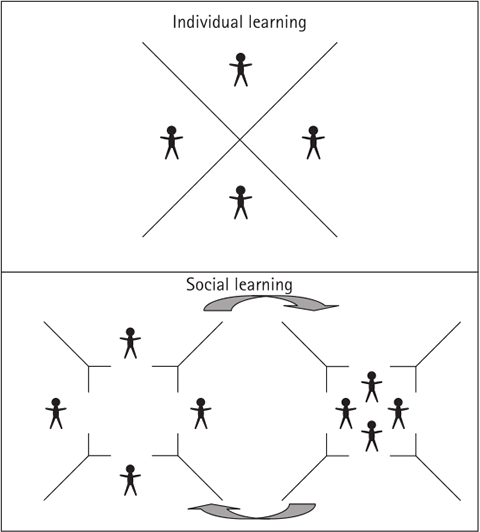
Three extensions to the first tournament game will (i) explore the effects of learners being able to select from whom to learn, (ii) allow agents to refine existing behavior cumulatively, and (iii) place the action in a spatially structured population with multiple demes. A total of 25,000 euro prize money is available, divided into three 5,000 euro prizes for the best strategy under any single extension, and a 10,000 euro prize for the best strategy under all three extensions.

The competition is now open for entries, with a closing date of

February 28 2012. More information can be found at:

http://lalandlab.st-andrews.ac.uk/tournament2/

We would like to encourage you, the members of your laboratories, and your colleagues and collaborators, to participate in this competition.Please do forward this message to anyone you think might be interested. We would also be grateful if you would print out and post the attached flier on your notice boards, and forward it to anyone you think might be interested.

We hope that this tournament will increase understanding of, and stimulate research on, the evolution of learning, as Axelrod’s tournament did for the evolution of cooperation.

*Rendell et al. (2010) Why copy others? Insights from the Social Learning Strategies Tournament. Science 328: 208-213

Image credit: Goldstein, D. G. (2009). Heuristics. In P. Hedström & P. Bearman (Eds.), The Oxford Handbook of Analytical Sociology. (pp. 140-164). New York: Oxford University Press. [Download]

September 5, 2011

Publish your health nudges

Filed in Articles ,Programs ,Research News
Subscribe to Decision Science News by Email (one email per week, easy unsubscribe)

SPECIAL ISSUE OF HEALTH PSYCHOLOGY ON BEHAVIORAL ECONOMICS

Health has a major impact on both individuals and nations. Health problems
can impact a person’s emotional, financial and social state; they can also
affect a nation’s financial and social standing. Indeed, countries across
the globe are currently battling the increasing costs of health care
delivery, while others are trying to modernize their systems. Furthermore,
most nations face similar health related challenges such as reducing
unhealthy behaviors (poor diet and smoking), increasing healthy behaviors
(exercising), assisting disadvantaged population gain better access to
health services, and improving adherence to medical treatment.

According to the Surgeon General’s Office the leading causes of mortality in
the U.S. have substantial behavioral components. It is no wonder, therefore,
that both psychologists and economists have been among the pioneers in
studying components associated with health behaviors and have provided a
range of successful behaviorally based prevention and treatment options.
Yet, the sheer extent of these problems calls for a more interdisciplinary
approach. In recent years a growing number of researchers have turned to
behavioral and experimental economics in the hopes of providing additional
insights to facilitate positive health behavior changes.

The aim of this special issue is to bring together the latest research in
behavioral and experimental economics on health related issues, stimulate
cross disciplinary exchange of ideas (theories, methods and practices)
between health economists and psychologists, and provide an opportunity to
simulate novel and creative ways to tackle some of the most important health
challenges we currently face. This special issue will be of interest not
only to a diverse range of researchers but to health professionals,
practitioners and policy makers alike.

With this call for papers, we hope to attract manuscripts that are
outstanding empirical and/or theoretical exemplars of research on any health
related topic from a behavioral and/or experimental economic perspective. We
anticipate studies will focus on a range of topics, including, but not
limited to: Smoking, Dietary choices, Adherence to treatment, Decision
making, Risk taking behavior, Choice architecture, Information asymmetry and
use of monetary incentives to alter behavior. We expect papers to reflect a
variety of methodologies but to highlight implications of the research for
practitioners and policy makers.

Authors should submit a short proposal (maximum of 400 words) that outlines
the plan for a full manuscript* to Yaniv Hanoch, PhD *and* Eric Andrew
Finkelstein*, PhD, guest editors for the special issue, by *March 1, 2012*.
The proposal should outline the study question, methods and findings of the
proposed submission and note how the paper will align with the theme of the
special issue. *Submissions are due August 1, 2012.* Papers should be
prepared in full accord with the *Health Psychology* Instructions to Authors
and submitted through the Manuscript Submission
Portal.
All manuscripts will be peer reviewed. Some papers not included in a
specific special section may be accepted for publication in *Health
Psychology* as regular papers. Please indicate in the cover letter
accompanying your manuscript that you would like to have the paper
considered for the Special Series on Health Psychology meets Behavioral
Economics.

August 30, 2011

The Effectiveness of Simple Decision Heuristics: Forecasting Commercial Success for Early-Stage Ventures

Filed in Articles ,Research News
Subscribe to Decision Science News by Email (one email per week, easy unsubscribe)

PREDICTING INVENTIONS’ SUCCESS WITH SIMPLE RULES

Most inventions fail to be commercialized profitably. Wouldn’t it be nice to be able to predict which ones will? This paper, by Astebro and Elhedhli argues that a simple rule can do quite well making forecasts in a difficult real-world setting.

CITATION
Åstebro, T. and Elhedhli, S. (2006). The Effectiveness of Simple Decision Heuristics: Forecasting Commercial Success for Early-Stage Ventures. Management Science, 52(3), 395-409.

ABSTRACT
We investigate the decision heuristics used by experts to forecast that early-stage ventures are subsequently commercialized. Experts evaluate 37 project characteristics and subjectively combine data on all cues by examining both critical flaws and positive factors to arrive at a forecast. A conjunctive model is used to describe their process, which sums “good” and “bad” cue counts separately. This model achieves a 91.8% forecasting accuracy of the experts’ correct forecasts. The model correctly predicts 86.0% of outcomes in out-of-sample, out-of-time tests. Results indicate that reasonably simple decision heuristics can perform well in a natural and very difficult decision-making context.

August 22, 2011

JDM 2011 Seattle: Novermber, 5-7, 2011

Filed in Conferences ,SJDM ,SJDM-Conferences
Subscribe to Decision Science News by Email (one email per week, easy unsubscribe)

32ND ANNUAL CONFERENCE OF THE SOCIETY FOR JUDGMENT AND DECISION MAKING, NOV 5-7, 2011, SEATTLE, WA, USA.

Now might be a good time to get a hotel reservation and flight to this year’s JDM conference. The Sheraton Seattle Hotel (map) is offering a discounted rate to the Psychonomics Society Meeting attendees, which JDM attendees can take advantage of (hotel rate information).

Decision Science News will see you in Seattle!

August 15, 2011

How many NYC restaurants get As on their health inspections?

Filed in Gossip ,Ideas ,R
Subscribe to Decision Science News by Email (one email per week, easy unsubscribe)

WITH DATA LIKE THESE, WHO CAN SAY?

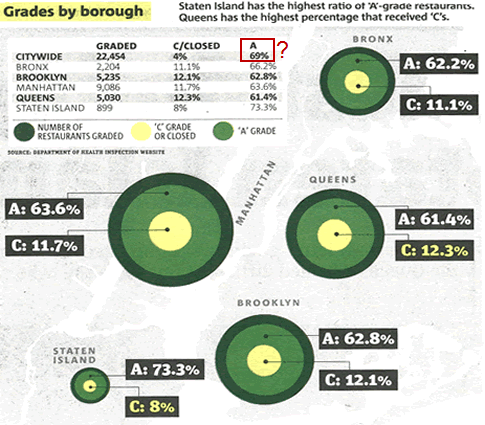
Decision Science News is no stranger to misleading infographics in free New York newspapers. We could upgrade to real newspapers, but we find that playing “spot the infographic flaw” really makes the time fly on the subway.

We saw the above graphic in a paper called Metro. In New York City, restaurants are graded by health inspectors and receive an “A”, “B”, or “C” rating (any lower than C and they are shut down). This graphic was supposed to inform us about the percentage of restaurants with As, by borough and citywide. Can you spot the goof?

You might be curious how the weighted average of 73.3%, 62.8%, 63.6%, 61.4%, and 62.2% could be 69% (shown in the red box) given that 73.3% gets the smallest weight in the average.

Ignoring the top row in the table, a simple calculation from the remaining numbers gives 63.6% as the percentage of restaurants with As. But which stat is correct? Perhaps the top row is correct and some other numbers in the table are wrong.

Amazingly, the same day, AM New York, yet another free paper, ran more or less the same story, but with different numbers. Based on those, 68% of restaurants had As. Disappointingly, all their by-borough percentages failed to line up with hose from Metro (see R code at end of this article).

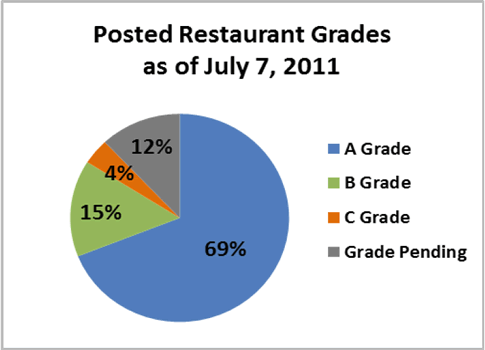
Decision Science News then tried to cut out the middleman and hit the New York City Department of Health and Mental Hygiene Website. Pie charts are much maligned, but when it comes to the topic of food safety, why not? If it were up to us, we would have drawn in a crust and whipped cream, but then our taste in charts is controversial.


Taken from http://www.nyc.gov/html/doh/downloads/pdf/rii/restaurant-grading-1-year-report.pdf

So, we now have four candidate figures, 69%, 63.6%, 68% and 69%, which are in no way independent, but do suggest the answer is “just shy of 70%”.

Another interesting tidbit in the health department’s report is that the restaurant grades may be effective at changing restaurants’ behavior. At first inspection, 39% of restaurants got As, 34% got Bs, and 27% got Cs. From page 3:

Among those scoring in the B range on initial inspection, nearly 40% improved to earn an A on reinspection. Of restaurants that scored in the C range on their initial inspection, 72% improved enough to earn an A or B on re-inspection.

There you have it!

R CODE FOR R NERDS

################
#Metro data
graded=c(22454,2204,5235,9086,5030,899)
asMetrostated=c(.69,.662,.628,.636,.614,.733)
asMetrocount=round(asMetrostated*graded)
metro=data.frame(graded,asMetrostated,asMetrocount)
row.names(metro)=c("citywide","bronx","brooklyn","manhattan","queens","statenIsland")
metro
sprintf("Total graded: %d", sum(metro[2:6,1]))
sprintf("Total As: %d", sum(metro[2:6,3]))
sprintf("Percent As: %.2f", (sum(metro[2:6,3]) / sum(metro[2:6,1]) * 100))
################
#AM New York data
statenIsland=c(644,73,20,82)
queens=c(3009,601,152,806)
brooklyn=c(3197,619,152,774)
bronx=c(1394,260,54,332)
manhattan=c(5792,1006,256,1314)
am=data.frame(bronx,brooklyn,manhattan,queens,statenIsland)
am[5,]=apply(am[1:4,],2,sum)
am[6,] = am[1,]/am[5,]
row.names(am)=c("A","B","C","GradePending","total","As")
round(am,2)
sprintf("Percent As: %.2f", sum(am[1,]) / sum(am[5,]))

ADDENDUM: Thanks to the folks at katom.com for finding a broken link on this page. Check out their site for restaurant inspection info.

August 9, 2011

Third of three special JDM journal issues on the Recognition Heuristic

Filed in Articles ,Ideas ,Research News
Subscribe to Decision Science News by Email (one email per week, easy unsubscribe)

SPECIAL ISSUE: RECOGNITION PROCESSES IN INFERENTIAL DECISION MAKING

The journal Judgment and Decision Making has published the third special issue on “Recognition processes in inferential decision making (III)” edited by Julian N. Marewski, Rüdiger F. Pohl and Oliver Vitouch.  At first, there was supposed to be just one special issue on the topic, but so many good articles were received it was expanded to two (which explains our older post referring to “first of two” special issues) and now it has been expanded again to a third and final issue. All the articles address the recognition heuristic [Goldstein, D. G. & Gigerenzer, G. (2002). Models of ecological rationality: The recognition heuristic. Psychological Review, 109, 75-90.]

This volume features a nice article by John Hauser, an MIT Marketing prof and a new contributor to JDM, on how recognition-based heuristics relate to the marketing literature. We at DSN think this is a very promising area for future research.

CONTENTS OF THE THIRD SPECIAL ISSUE
Recognition-based judgments and decisions: What we have learned (so far), pp. 359-380.
Julian N. Marewski, Rüdiger F. Pohl and Oliver Vitouch

Effects of ignorance and information on judgments and decisions, pp. 381-391.
Peter Ayton, Dilek Önkal and Lisa McReynolds

The beauty of simple models: Themes in recognition heuristic research, pp. 392-395.
Daniel G. Goldstein and Gerd Gigerenzer

A marketing science perspective on recognition-based heuristics (and the fast-and-frugal paradigm), pp. 396-408.
John Hauser

Recognising the recognition heuristic for what it is (and what it’s not), pp. 409-412.
Ben R. Newell

The limited value of precise tests of the recognition heuristic, pp. 413-422.
Thorsten Pachur

On the use of recognition in inferential decision making: An overview of the debate, pp. 423-438.
Rüdiger F. Pohl

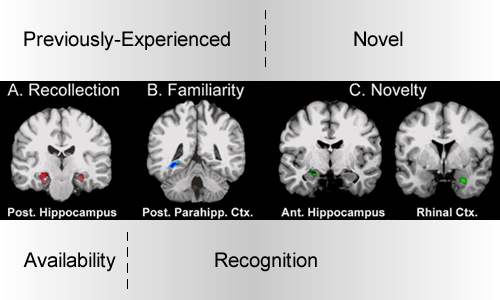
Photo adapted from S. M. Daselaar, M. S. Fleck, and R. Cabeza. (2006) Triple Dissociation in the Medial Temporal Lobes: Recollection, Familiarity, and Novelty. Journal of Neurophysiology 96, 1902-1911.

August 1, 2011

On not going viral

Filed in Ideas ,R ,Research News
Subscribe to Decision Science News by Email (one email per week, easy unsubscribe)

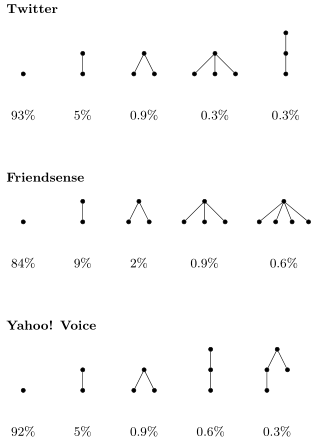
LACK OF EVIDENCE FOUND FOR THINGS “GOING VIRAL” ON MAJOR WEB PLATFORMS


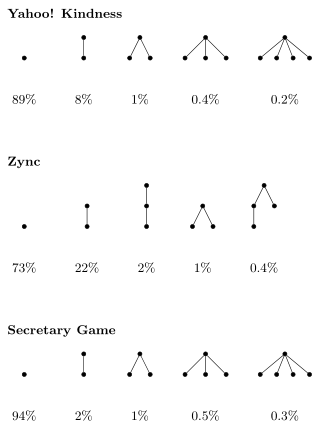
This week the reader is directed to Messy Matters to read up on research conducted by Sharad Goel, Duncan Watts and Dan Goldstein in which they hunted for traces of “viral” diffusion on six web platforms including Twitter, Facebook, and Yahoo!. The results run counter to mainstream intuition.

July 25, 2011

Interview at the AMA to be a goverment fellow and do some good

Filed in Jobs
Subscribe to Decision Science News by Email (one email per week, easy unsubscribe)

CONSUMER FINANCIAL PROTECTION BUREAU (CFPB) FELLOWSHIPS IN HOUSEHOLD FINANCE AND CREDIT MARKETS

Here at DSN, we know that some readers are gearing up to interview for a professorship at the AMA conference and for this reason provide tips here. This year, AMA goers will also have an opportunity to interview for a couple very nice government fellowships that put behavioral economics to work:

Consumer Financial Protection Bureau (CFPB) Fellowships in Household Finance and Credit Markets

The Office of Research in the Consumer Financial Protection Bureau is seeking to fill up to two positions in its Fellows Program and one position in its Senior Fellows Program. Appointments will be for up to two years.

Researchers with expertise in the following areas of psychology and marketing are strongly encouraged to apply:

Judgment and decision-making, heuristics and biases, risk perception; financial decision-making, mental accounting and budgeting; self control, identity, discrimination, social influences in decision making, cognitive psychology.

Fellows will have half time for carrying out independent, self-directed research in these areas. Fellows will also provide analytic support to various aspects of the Bureau’s work concerning financial products and consumer protection, including policy development, regulation, supervision and enforcement.

Interested candidates should apply for these positions through the CFPB website. The positions will be posted during the AMA Summer Educators’ Conference and for a short time afterward. Candidates who are ranked highly based on their application materials will be invited to the CFPB to interview and present their work.

Senior members of the Office of Research will be present at the AMA Summer Educators’ Conference.

We will hold informational sessions and host a gathering (with light refreshments) on Friday and Saturday, August 5 and 6.

All individuals interested in learning more about these positions, the Bureau, and the application process are encouraged to attend an event. To help candidates with planning, we are committing to the following schedule.

Meetings are in Room 2948 at the Marriott Marquis:

Friday, August 5
45 minute information sessions with Q&A at 8am, 9am, 10am, 11am.
Reception 5:00pm-7:00pm. Location: TBA
Saturday, August 6
45 minute information sessions with Q&A at 9am, 10am, 11am, 12pm.
Reception 5:00pm-7:00pm. Location: TBA

The Consumer Financial Protection Bureau (CFPB) is a new agency that will be an independent bureau within the Federal Reserve System. Created in July 2010 by the “Dodd-Frank Wall Street Reform and Consumer Protection Act”, the CFPB will help empower consumers with the information they need to make financial decisions that are best for them and their families and will set and enforce clear, consistent rules that allow banks and other consumer financial services providers to compete on a level playing field. For more information on the CFPB, please visit our website at http://www.consumerfinance.gov/

Photo credit: Some images taken from the CFPB’s YouTube Video.

July 21, 2011

How much deception is there in social psychology?

Filed in Ideas ,Research News
Subscribe to Decision Science News by Email (one email per week, easy unsubscribe)

IN SEARCH OF THE PERCENTAGE OF ARTICLES THAT EMPLOY DECEPTION

Decision Science News was recently at a cocktail party and mentioned that the percentage of studies in a top social psychology journal that employed deception was 80%.

Coarsely, deception in psychological research usually means telling falsehoods (* some say “lies”) to experimental participants. It is supposed to be followed up by debriefing, which is the technical term for confessing. Apologizing is not part of the protocol. Experimental economists tend never to use deception, social psychologists use it some of the time. But how much?

At the cocktail party, our interlocutors accused us of deceiving them about the 80% number. Something to the tune of “you just made that up!”

“Did we just make that up?”, we wondered.

Utilizing a new technology called “the internet”, DSN found the 80% figure cited in two articles Ortmann & Hertwig, 1997 and Taylor and Shepperd, 1996. We didn’t just make it up! However, these articles didn’t do the counting themselves, they cited another article. For example, Taylor and Shepperd say “upwards of 81% of studies published in the top psychological journals use deception (Adair, Dushenko & Lindsay, 1985).”

But what did Adair, Dushenk & Lindsay say?

Leveraging a sophisticated multi-stage technique known as “downloading the article” we found that these authors went through all articles published in JPSP, JESP, and PSPB in 1983, extracted each study, and coded whether it used deception or not. (JPSP = Journal of Personality and Social Psychology; JESP = Journal of Experimental Social Psychology; PSPB = Personality and Social Psychology Bulletin). The results are summarized in their Table 5 on page 86.

The result: a stunning 81% of studies in JESP that year used deception. 50% of JPSP studies and 54% of PSPB studies used the practice. Aggregating, 55% of studies in the three journals used the practice in 1983, which is a bit lower than 1979 (58%).

1979, by the way, seems to have been a tough year for a few experimental social psych participants. The Adair et al article (p. 65) mentions a 1979 study by Marshall & Zimbardo in which

Subjects were (a) misled about the purpose of the study, (b) told that they would receive a vitamin injection when, in fact, they received an injection of epinephrine, (c) misinformed regarding the somatic effects of the drug, and (d) misled through fake equipment to believe that their physiological responses were no longer measured when in fact they were. In addition, (e) a doctor also faked the administration of a comparable injection to (f) a confederate, who then (g) proceeded to act in a bizarrely “euphoric” fashion to create a context for subjects’ perceptions of the drug’s effects. In a footnote the authors noted that (h) the medical school’s ethics committee did not allow them to introduce an anger manipulation as well. On top of all this, a complete debriefing of subjects was postponed for several weeks until all of the subjects had been tested.

They also mention (p. 64) the following study, first noted by Kelman (1967):

An experiment (Campbell, Sanderson, & Laverty, 1964) designed to study the establishment of a conditioned response in a situation that was traumatic but not painful and in which stress was induced through the use of a drug that produced a temporary interruption of respiration. This experience, although not painful, was regarded as “horrific” by subjects. Subjects were not warned in advance about the effect of the drug, because this information would have reduced the traumatic impact of the experience.

It would be good to know what the rate of deceptive experiments is today. If anyone knows, please share.

REFERENCES
Adair, J.G., Dushenko, T.W., & Lindsay, R.C.L. (1985). Ethical regulations and their impact on research practice. American Psychologist, 40, 59-72.

Campbell, D., Sanderson, R. E., & Laverty, S. G. (1964). Characteristics of a conditioned response in human subjects during extinction trials following a single traumatic conditioning trial. Journal of Abnormal and Social Psychology, 68, 627-639.

Kelman, H. C. (1967). Human use of human subjects: The problem of deception in social psychological experiments. Psychological Bulletin, 67, 1-11.

Marshall, G. D., & Zimbardo, P. G. (1979). Affective consequences of inadequately explained physiological arousal. Journal of Personality and Social Psychology, 37, 970-988.

Ortmann, A. & Hertwig, R. Is Deception Acceptable? American Psychologist, 52, 746-747.

Taylor, K.M. & Shepperd, J. A. (1996). Probing suspicion among participants in deception research. American Psychologist, 51, 886-887.

(*) Sorry if the term “telling falsehoods” (or “lying” as some say) offends the reader’s sensibilities, however, it can be occasionally useful to suspend a euphemism for a moment to remind oneself of the underlying logical equivalence. One might object that deception is softer than lying. According to m-w.com to deceive is “to give a false impression” while to lie is “to make an untrue statement with the intent to deceive”. By these definitions, one could imagine deception in experiments that does not involve lying. For instance, since cosmetics can cause people to look younger than they are, asking participants to judge the age of a model who is wearing cosmetics is mild deception, but not lying. Telling the participant that the model is not wearing cosmetics is lying. This latter case is what is called “deception” in psychology, with few exceptions.

UPDATE
After posting this, I got an email from a family friend who happens to be a world expert on the topic, and adds some valuable references. The Nicks, Korn and Mainieri article reports the following percentages of deceptive studies for 1994: JPSP 31% and JESP 50%. As in 1983, JESP is still quite a bit higher.

* Korn, J. H. Illusions of reality: A history of deception in social psychology. SUNY Press, 1997. especially chapter 2 on the grownth of deception from 1921 to 1989.

* Nicks, S. D., Korn, J. H., & Mainieri, T. (1997). The rise and fall of deception in social psychology and personality research, 1921 to 1994. Ethics and Behavior, 7, 69-77.

UPDATE TWO

A reader writes:

Dear Decision Science News,

Your internet search was somewhat incomplete. Hertwig and Ortmann wrote many more
interesting articles on deception ;-), and they did so (much) more recently; in some of these
articles they actually did some counting (e.g., those marked with “*” which are attached).
Here is a more complete list of their articles on deception; feel free to distribute widely:

Hertwig & Ortmann: “Deception in Social Psychological Experiments: Two Misconceptions and
a Research Agenda,” Social Psychology Quarterly, 71.3., 2008, 222 – 227.

*Hertwig & Ortmann, “Deception in Experiments: Revisiting the Arguments in Its Defense,”
Ethics and Behavior 18.1., 2008, 59 – 92. (This being a companion piece to the next.)

*Ortmann & Hertwig, “The Costs of Deception: Evidence From Psychology,”
Experimental Economics 5.2., 2002, 111 – 131.

Hertwig & Ortmann, “Money, lies, and replicability: On the need for empirically grounded
experimental practices and interdisciplinary discourse,” (with Ralph Hertwig), Behavioral and
Brain Sciences 24, 2001, 433 -451.

Hertwig & Ortmann, “Experimental Practices in Economics: A Challenge for Psychologists? [target article],”
Behavioral and Brain Sciences 24, 2001, 383 – 403. http://www.cogsci.soton.ac.uk/bbs/Archive/bbs.hertwig.html
[Reprinted in H. Stam (ed.), Theoretical Psychology – Contemporary Readings, SAGE, 2011, forthcoming.]

Ortmann & Hertwig, “The Question Remains: Is Deception Acceptable?” American Psychologist
53.7., 1998, 806 – 807.

Photo credit: http://www.flickr.com/photos/emilykbecker/5829019719/