[ View menu ]

October 30, 2013

Microsoft Research Postdocs for 2014

Filed in Jobs
Subscribe to Decision Science News by Email (one email per week, easy unsubscribe)

POSTDOCS IN COMPUTATIONAL SOCIAL SCIENCE, ONLINE EXPERIMENTAL SOCIAL SCIENCE, ECONOMICS AND COMPUTATION, MACHINE LEARNING

Microsoft Research NYC [ http://research.microsoft.com/newyork/ ] seeks outstanding applicants for 2-year postdoctoral researcher positions. We welcome applicants with strong quantitative and computational skills and a strong academic record in the following areas:

* Computational social science: http://research.microsoft.com/cssnyc
* Online experimental social science: http://research.microsoft.com/oess_nyc
* Economics and computation: http://research.microsoft.com/algorithmic-economics/
* Machine learning: http://research.microsoft.com/mlnyc/

We will also consider applicants in other focus areas of the lab, including information retrieval. Additional detail about these areas is included below. Please submit all application materials by December 13, 2013. Instructions are here: http://research.microsoft.com/en-us/jobs/fulltime/postdoc.aspx#NYC

SPECIAL NOTE TO DECISION SCIENCE NEWS READERS

  • MSR-NYC is a highly quantitative place. For the social science postdocs, applicants should have strong competence in computer programming, math, or statistics at the level of someone with a Bachelor’s or Master’s degree in CS, math, or stats. Simply meeting the stats requirements in a social science PhD program would not be enough to be considered.
  • In additional to having computational or mathematical skills, only applicants with computational or statistical research interests will be considered.
  • These are thoroughly academic positions. They are good preparation for a career in academia (often taken to defer starting a professorship by a year or two) and are not intended for students looking to move into industry.

COMPUTATIONAL SOCIAL SCIENCE
http://research.microsoft.com/cssnyc

With an increasing amount of data on every aspect of our daily activities — from what we buy, to where we travel, to who we know — we are able to measure human behavior with precision largely thought impossible just a decade ago. Lying at the intersection of computer science, statistics and the social sciences, the emerging field of computational social science uses large-scale demographic, behavioral and network data to address longstanding questions in sociology, economics, politics, and beyond. We seek postdoc applicants with a diverse set of skills, including experience with large-scale data, scalable statistical and machine learning methods, and knowledge of a substantive social science field, such as sociology, economics, psychology, political science, or marketing.

ONLINE EXPERIMENTAL SOCIAL SCIENCE
http://research.microsoft.com/oess_nyc

Online experimental social science involves using the web, including crowdsourcing platforms such as Amazon’s Mechanical Turk, to study human behavior in “virtual lab” environments. Among other topics, virtual labs have been used to study the relationship between financial incentives and performance, the honesty of online workers, advertising impact as a function of exposure time, the implicit cost of “bad ads,” the testing of graphical user interfaces eliciting probabilistic information and also the relationship between network structure and social dynamics, related to social phenomena such as cooperation, learning, and collective problem solving. We seek postdoc applicants with a diverse mix of skills, including awareness of the theoretical and experimental social science literature, and experience with experimental design, as well as demonstrated statistical modeling and programming expertise. Specific experience running experiments on Amazon’s Mechanical Turk or related crowdsourcing websites, as well as managing virtual participant pools is also desirable, as is evidence of UI design ability.

ECONOMICS AND COMPUTATION
http://research.microsoft.com/algorithmic-economics/

Market design, the engineering arm of economics, benefits from an understanding of computation: complexity, algorithms, engineering practice, and data. Conversely, computer science in a networked world benefits from a solid foundation in economics: incentives and game theory. Scientists with hybrid expertise are crucial as social systems of all types move to electronic platforms, as people increasingly rely on programmatic trading aids, as market designers rely more on equilibrium simulations, and as optimization and machine learning algorithms become part of the inner loop of social and economic mechanisms. We seek applicants who embody a diverse mix of skills, including a background in computer science (e.g., artificial intelligence or theory) or related field, and knowledge of the theoretical and experimental economics literature. Experience building prototype systems, and a comfort level with modern programming paradigms (e.g., web programming and map-reduce) are also desirable.

MACHINE LEARNING
http://research.microsoft.com/mlnyc/

Machine learning is the discipline of designing efficient algorithms for making accurate predictions and optimal decisions in the face of uncertainty. It combines tools and techniques from computer science, signal processing, statistics and optimization. Microsoft offers a unique opportunity to work with extremely diverse data sources, both big and small, while also offering a very stimulating environment for cutting-edge theoretical research. We seek postdoc applicants who have demonstrated ability to do independent research, have a strong publication record at top research venues and thrive in a multidisciplinary environment.

October 24, 2013

AAAS Science & Technology Policy Fellowship

Filed in Jobs ,Programs ,Research News
Subscribe to Decision Science News by Email (one email per week, easy unsubscribe)

AAAS FELLOWSHIP DEADLINE NOVEMBER 1, 2013

aaas

What is the AAAS? As their website puts it: “The American Association for the Advancement of Science, ‘Triple A-S’ (AAAS), is an international non-profit organization dedicated to advancing science around the world by serving as an educator, leader, spokesperson and professional association”

Craig Fox let us know about this great opportunity:

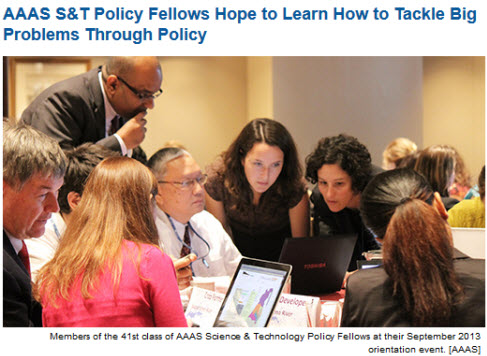
I have been asked to draw your attention to the AAAS Science Technology Policy Fellowship that now has placement opportunities for the new U.S. Social and Behavioral Science Team. This is an outstanding opportunity for would-be Nudgers to bring our science into practice serving the public interest through various government agencies.

The application deadline is Nov 1st for a fellowship that can last up to two years. Only individuals with a doctoral-level degree can apply.

https://fellowshipapp.aaas.org/applications/

October 15, 2013

SCP 2014 Miami

Filed in Conferences
Subscribe to Decision Science News by Email (one email per week, easy unsubscribe)

SOCIETY FOR CONSUMER PSYCHOLOGY 2014 WINTER CONFERENCE, MARCH 6-8, MIAMI

icm

The Society for Consumer Psychology (SCP) will be holding its Annual Winter Conference from March 6 – 8, 2014 at the Intercontinental Miami Hotel in Miami, Florida . The Society for Consumer Psychology conference provides opportunities for a high level of interaction among participants interested in consumer research and in advancing the discipline of consumer psychology in a global society.

Call for papers

HOTEL INFORMATION:
The Intercontinental Miami Hotel is located at 100 Chopin Plaza, Miami, FL 33131. The telephone number is: 800 496 7621. When making reservations you must mention that you are with the Society for Consumer Psychology to obtain the group rate of $269.00

Visit the hotel website at: www.intercontinental.com/hotels/gb/en/miami/miaha/hoteldetail/
If you have questions, please email the conference co-chairs at: scpmiami2014@wharton.upenn.edu

October 9, 2013

Big data: Integrating Marketing, Statistics and Computer Science

Filed in Articles ,Research News
Subscribe to Decision Science News by Email (one email per week, easy unsubscribe)

CALL FOR PAPERS: MARKETING SCIENCE SPECIAL ISSUE ON BIG DATA

data

BIG DATA: INTEGRATING MARKETING, STATISTICS AND COMPUTER SCIENCE

SUBMISSION DEADLINE: December 16, 2013

Digital marketing brings unparalleled data on opinions and behavior. Data include structured data, such as numerical data on consumer purchasing, participation in social media, or exposure to online marketing, and unstructured data, such as text, audio, or even video content freely provided by consumers. Because of scale, these data are often called “Big Data,” with principal characteristics of high volume, high velocity, and high variety. High volume implies the need for models that are scalable; high velocity opens opportunities for real-time, or virtually real-time, marketing decision making that may or may not be automated; and high variety may require integration across disciplines with the corresponding sensitivity to various methods and philosophies of research.

The Special Issue draws on recent advances in computer science and statistics to deepen our understanding of consumer behavior and to improve the practice of marketing in data-rich environments. We encourage new research that spans boundaries to address important marketing science topics. Submitted papers might address marketing problems that could not be resolved prior to the Big Data era. Other papers might combine structured and unstructured data for greater insight. Still other papers might use new methods that scale well to big data. We are open to the use of different research methodologies and we are particularly interested in innovative combinations of methods. We welcome scalable methods that mine large volumes of data, but such papers should address validation, say with out-of-sample testing. Field experiments to test new methods are welcome. We welcome machine learning, dynamic programming, adaptive regression, visualization methods, text processing, and other methods if scale can be demonstrated. We are less interested in existing methods applied to existing problems but with large data sets, conceptual papers on the role of big data, or anecdotes of how big data alone provided managerial insights.

Please submit your manuscript online via ScholarOne Manuscripts at http://mc.manuscriptcentral.com/mksc. When choosing Manuscript Type in Step 1 of the submission process, enter Special Issue – Big Data. All papers will go through the standard review process. Questions should be directed to Frances Moskwa, Managing Editor (frances.moskwa at informs.org).

Special Issue Editors
Pradeep Chintagunta, University of Chicago
Dominique Hanssens, University of California, Los Angeles
John Hauser, Massachusetts Institute of Technology

Special Issue Associate Editors
Sinan Aral, Massachusetts Institute of Technology
Anand Bodapati, University of California, Los Angeles
Eric Bradlow, University of Pennsylvania
Theodoros Evgeniou, INSEAD
David Godes, University of Maryland
Dan Goldstein, Microsoft Research
P.K. Kannan, University of Maryland
Peter Lenk, University of Michigan
Rob McCulloch, University of Chicago
Carl Mela, Duke University
Oded Netzer, Columbia University
Koen Pauwels, Ozyegin
Peter Rossi, University of California, Los Angeles
Olivier Toubia, Columbia University

October 3, 2013

OPIM Professorship at Wharton

Filed in Jobs
Subscribe to Decision Science News by Email (one email per week, easy unsubscribe)

PROFESSORSHIP IN OPERATIONS AND INFORMATION MANAGEMENT AT THE UNIVERSITY OF PENNSYLVANIA

whar

Department of Operations and Information Management
The Wharton School
UNIVERSITY OF PENNSYLVANIA

The Operations and Information Management Department at the Wharton School is home to faculty with a diverse set of interests in decision-making, information technology, information-based strategy, operations management, and operations research. We are seeking applicants for a full-time, tenure-track faculty position at any level: Assistant, Associate, or Full Professor. Applicants must have a Ph.D. (expected completion by June 2014 is preferred but by June 30, 2015 is acceptable) from an accredited institution and have an outstanding research record or potential in the OPIM Department’s areas of research. Candidates with interests in multiple fields are encouraged to apply. The appointment is expected to begin July 1, 2014 and the rank is open.

More information about the Department is available at: http://opimweb.wharton.upenn.edu/

To apply please visit our secure web site: https://opimweb.wharton.upenn.edu/faculty/faculty-recruiting/

Interested individuals should complete and submit an online application. This includes:

· A curriculum vitae
· At least one sample publication or working paper

Applicants are encouraged to submit additional research publications. Applicants to an Assistant Professor position must ensure that three letters of recommendation are submitted by their references. Associate and Full Professor must provide three names as references.

To ensure full consideration, materials should be received by November 1st, 2013.

Contact:

OPIM Department
The Wharton School
University of Pennsylvania

3730 Walnut Street
500 Jon M. Huntsman Hall
Philadelphia, PA 19104-6340

The University of Pennsylvania values diversity and seeks talented students, faculty and staff from diverse backgrounds. The University of Pennsylvania is an equal opportunity, affirmative action employer. Women, minority candidates, veterans and individuals with disabilities are strongly encouraged to apply.

September 24, 2013

Skipping breakfast and everything causing cancer

Filed in Ideas ,Research News
Subscribe to Decision Science News by Email (one email per week, easy unsubscribe)

OBSERVATIONAL STUDIES: “CONVINCING PEOPLE OF THINGS WITHOUT ACTUALLY GENERATING EVIDENCE”

bb

The New York Times had an article on the widespread confusion about whether skipping breakfast causes you to gain or lose weight. It seems there’s no substantial evidence that skipping breakfast has any effect on obesity.

What we found most amusing was this passage with a quote from Dr. David Allison:

Dr. Allison said that the true relationship between eating breakfast and body weight, if there is one, was still an open question. But observational studies that tout an association between the two are churned out “just about every week,” despite doing nothing to actually test or prove the claim.

“At some point, this becomes absurd,” he said. “We’re doing studies that have little or no value. We’re wasting time, intellect and resources, and we’re convincing people of things without actually generating evidence.”

It reminds us of the recent paper in which the authors decided to pick 50 common cookbook ingredients at random and found that 80% of them were claimed to cause or prevent cancer. Little evidence was found for any of the claims.

Here’s an idea: If the reason behind having IRB approval for studies is to prevent their doing any harm, why isn’t there an IRB approval process for publishing (as opposed to conducting) observational health and nutrition studies? They seem to do a lot of harm in making people change their diets and behavior for no good reason, not to mention the needless worry they cause.

Large scale randomized trials would be exempt from this pre-publication IRB process. Wink.

Photo credit:http://www.flickr.com/photos/beautifulcataya/5089823061/

September 21, 2013

Every day is a big day

Filed in Ideas
Subscribe to Decision Science News by Email (one email per week, easy unsubscribe)

CARPE DIEM: SEIZE THE DAY

fld2

Our friend Pete McGraw often says “today is a big day”. When people ask why, he says that every day is a big day. As he writes on his blog, Pete saw his parents die well before their life expectancies, he saw his house, which sits a mile above sea level, suddenly flooded. It reminded him that life is short and can change for the worse very quickly.

Something to keep in mind when deciding about what risks to take and how much weight to put on the distant future.

See Pete’s flooded house on the Boulder news:

Photo credit: http://www.flickr.com/photos/shankargallery/9806276953/

September 9, 2013

New York Computer Science and Economics Day (NYCE 2013)

Filed in Conferences
Subscribe to Decision Science News by Email (one email per week, easy unsubscribe)

NYCE: NOVEMBER 1, 2013 AT THE SIMONS FOUNDATION IN NEW YORK CITY

nyce

Call for Participation:
New York Computer Science and Economics Day (NYCE) will be held on November 1, 2013 at the Simons Foundation in New York City. The goal of NYCE Day is to bring together researchers in New York and surrounding areas who are interested in problems at the intersection of economics and computation. Our invited speakers this year are

  • Nicole Immorlica
  • Panos Ipeirotis
  • Christos Papadimitriou
  • Rakesh Vohra.

More details about the program can be found on the website:

https://sites.google.com/site/nycsecon2013/home

Submissions:
The deadline for submissions for short talks and posters is October 8th. Topics of interest to the NYCE community include (but are not limited to) the economics of Internet activity such as search, user-generated content, or social networks; the economics of Internet advertising and marketing; the design and analysis of electronic markets; algorithmic game theory; mechanism design; and other subfields of algorithmic economics. We welcome posters and short talks on theoretical, modeling, algorithmic, and empirical work. You can submit your abstract via our submission form at:

https://sites.google.com/site/nycsecon2013/posters-and-short-presentations

Registration:
If you plan to attend the workshop please register online before October 15, 2013 at

https://sites.google.com/site/nycsecon2013/registration

Please note that the venue for NYCE 2013 has a limited space, and on-site registration may only be available on a (limited) first-come first-served basis.

Organizing Committee

  • Jason Hartline (Northwestern University)
  • Vahab Mirrokni (Google Research)
  • Jenn Wortman Vaughan (Microsoft Research, New York City)

September 5, 2013

Tipping on room service when delivery fee and service charge are included

Filed in Ideas
Subscribe to Decision Science News by Email (one email per week, easy unsubscribe)

PARTITION EFFECTS IN TIPPING

rs

When you order room service in a hotel, the bill often includes a “delivery charge” of a few dollars plus a “service charge” of close to 20%. When you sign the bill, there is always a blank that says “Additional gratuity”.

From a decision science perspective, it would seem odd if people who generally tip less than 20% on deliveries add something to the “additional gratuity” line simply because the tip has been partitioned into two parts: a required 20% part and an “add what you will” part. This similar to the phenomenon of “partition dependence” in the judgment and decision making literature.

The question we had was whether people add an additional gratuity in this situation.

We are not the only ones who had this question. We quickly found a dozen URLs (see URLs at bottom) of forums in which this issue was discussed.

Looking at the forum posts, a few themes recurred:

  • People said that it was never clear if the service charge went to the delivery person (making it the gratuity) or to the hotel or if it was spread around.
  • People who did not tip extra tended to be stronger in their opinions than those who did.
  • People who did tip extra tended to say they’d add about two dollars, usually in cash.
  • Websites varied in their proportion of respondents who tip extra.

To the last point, we combed through the forums and coded as many posts as we could as pro- or con- tipping extra. The results are below, where each row has the syntax:

WEBSITE: #_TIPPING_EXTRA / #_RELEVANT_COMMENTS = %_TIPPING_EXTRA

RESULTS
Fodors: 5 / 23 = 21%
Chowhound: 10 / 23 = 43%
Hotelchatter: 1 / 5 = 20%
Metafilter: 3 / 11 = 27%
Milepoint: 7 / 16 = 44%
Datalounge: 2 / 4 = 50%
Yahoo Answers: 2 / 11 = 18%
Flyertalk: 7 / 19 = 37%

Adding this all together we get:

Grand Total 37 / 112 = 33% tipping extra

Because generosity is socially desirable, those who do tip extra may be more likely to comment than those who don’t. This selection effect would suggest 33% is too high. On the other hand, there may be a sets of people who do add an additional tip for various reasons (e.g. due to misunderstanding, generosity, or being well off) but don’t participate in forums for various reasons. This would suggest that 33% is too low. We’re not comfortable guessing in which direction our estimate is biased.

Suppose that a third of people do tip more when the tip is partitioned than when it’s not. How far this can be pushed? Would it go up if the bill read as follows?

Delivery charge: $5
Base Service charge: 15%
Supplemental Service charge: 10%
Additional Gratuity: ________

NOTES

  • When coding the forum posts, we tried to capture what people most always do. We tried to ignore comments that said things like “it depends” or dodged the question. As we got tired, we may have drifted in our coding policy a bit.
  • If you want to read something funny about hidden fees, see Ian Frazier’s “From the Bank with Your Money on Its Mind“.
  • If you want to read another DSN post on tipping, see: Tipping Heuristics

URLS OF FORUMS DISCUSSING TIPPING EXTRA

  • http://www.fodors.com/community/united-states/room-service-tipping-question.cfm
  • http://chowhound.chow.com/topics/637417
  • http://chowhound.chow.com/topics/673942
  • http://chowhound.chow.com/topics/483414
  • http://chowhound.chow.com/topics/475569
  • http://www.hotelchatter.com/story/2008/8/21/141155/151/hotels/HotelChatter_OpenThread_%3A%3A_Should_We_Tip_Extra_for_Room_Service%3F_
  • http://ask.metafilter.com/46319/Should-I-tip-extra-for-room-service
  • http://milepoint.com/forums/threads/do-you-tip-for-room-service.3805/
  • http://www.datalounge.com/cgi-bin/iowa/ajax.html?t=11525842#page:showThread,11525842
  • http://answers.yahoo.com/question/index?qid=20070305164501AAqaVCI
  • http://www.flyertalk.com/forum/archive/t-711790.html
  • http://www.flyertalk.com/forum/starwood-preferred-guest/175647-room-service-tipping.html


Photo credit:www.flickr.com/photos/merydith/4576874311/

August 29, 2013

How do people die?

Filed in Encyclopedia ,Research News
Subscribe to Decision Science News by Email (one email per week, easy unsubscribe)

A GLOBAL VIEW

die

The Guardian newspaper in the UK made this rather amazing interactive infographic (click through to interact) on causes of death, conditioned on age and region, around the world.

They also provide, below, a display of ranked causes of death, and how they’ve changed since 1990.

dierank

How do people die? One thing that pops out is how “cardio and circulatory diseases” increase in probability with age and ultimately become the most likely cause.

Also striking is that in a number of regions of the world, most deaths occur before age 5.