Filed in
Conferences
 Subscribe
 to Decision Science News by Email (one email per week, easy unsubscribe)
THE EDWARDS BAYESIAN RESEARCH CONFERENCE
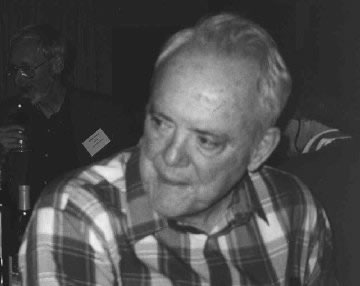
Photo by Jim Shanteau
Ward Edwards, one of the main founders of the field of behavioral decision making, hosted the Bayesian Research Conference annually since 1961. For many years the conference was held in Studio City, CA, near Wardâs home. It is now hosted by Michael Birnbaum and Jie Weiss, JDM members from Cal State Fullerton, and has been moved to their campus. With the passing of Ward in 2005, we are honoring him and flattering ourselves by henceforth attaching his name to the conference.
The conference will take place January 12-13, 2006 in Fullerton, California
Features of the Edwards Bayesian Research Conference:
1) An intimate, friendly two-day meeting with no parallel sessions, lots of time for informal discussion, and low registration fee ($50). Sessions meet on the campus of Cal State Fullerton; excellent rates ($89 including breakfast and a Jacuzzi in every room) are available at the nearby Chase Suites.
2) An eclectic program. The label “Bayesian” was actually more narrow that the conference. Although there have always been talks about Bayesian analysis and reasoning, the talks in recent years have covered a wide variety of topics in both theoretical and applied aspects of decision making. Ward was very open-minded, and we will follow that tradition. Ward always asked for people to bring new ideas, even if not fully baked, for him to mull over. Two particular traditions of the Conference are that paper titles will be âimprovedâ to be humorous and that time is allocated for discussion after every presentation.
3) The Conference is held prior to the Martin Luther King holiday weekend, with paper sessions Thursday and Friday. There will also be a reception Wednesday evening in the hotel and a party Friday evening (another of Wardâs traditions) at the nearby home of David and Jie Weiss.
4) Itâs usually warm and sunny in Southern California in January (but there is non-zero utility attached to the umbrella at the bottom of the suitcase). On the Saturday following the conference, there will be a (no-cost) tennis session for those who dare.
5) The Cal State Fullerton campus is easily reached using Super Shuttle or Prime Time Shuttle. The closest four commercial airports are (in order of proximity):
Long Beach (LGB)
John Wayne-Orange County (SNA)
Ontario International (ONT)
Los Angeles International (LAX)
If you are interesting in attending, please see the conference website for further information (http://psych.fullerton.edu/mbirnbaum/bayes/) and a registration form. Please register before December 7, 2005.
Editors note: DSN has been to this conference twice and both times left having made meaningful acquaintances. Call it the small conference advantage.
Filed in
Conferences
Subscribe to Decision Science News by Email (one email per week, easy unsubscribe)
INTERNATIONAL CORPORATE RESPONSIBILITY CONFERENCE
London Business School invites submissions to the third in a series of international corporate responsibility conferences (following the Haas conference in 2005 and the Boston conference in 2003). Topics for inclusion range widely but those of particular interest explore the implications of corporate responsibility, globalization and global business for business and marketing strategy. Research papers can be either empirical or conceptual. A selection of papers presented will be considered for a special issue of the California Management Review.
Abstracts must clearly identify your research question(s) and the actual/proposed methodology used. You will receive notice by January 31st, 2006 as to whether your topic has been selected for inclusion in the conference. Authors of successful submissions will be invited to submit a paper.
Please submit a maximum 500-word abstract of your topic to ncsmith at london.edu
Proposal submission deadline December 31st, 2005.
Topic areas include the following:
Consumer behavior, branding & corporate responsibility
· Brand equity as a driver of attention to corporate responsibility (e.g., how does corporate responsibility affect consumer behavior?)
· Vulnerabilities of global brands to corporate responsibility failures
· Cause-related marketing and corporate responsibility
Marketing mix and corporate responsibility issues
· Socially responsible pricing (e.g., essential medicines)
· Environmental impacts of products and packaging
· Supply chains and ethical sourcing (e.g., preventing sweatshops, supply chain monitoring and compliance)
Developing strategies for corporate responsibility
· Developing corporate responsibility strategies, including auditing the business and formulating corporate responsibility objectives
· Culture-specific interpretations of corporate responsibility, including developing country versus developed-country perceptions of corporate responsibility issues
· Strategies for the âBottom of the Pyramidâ (e.g., business opportunities in poor communities of developing countries, limitations of BOP strategies)
Corporate responsibility organization and management
· âMainstreamingâ corporate responsibility (embedding corporate responsibility in the day-to-day activities of the firm)
· Effective stakeholder engagement (e.g., developing stakeholder engagement skills, differences in stakeholder expectations across countries)
· Employees as drivers of attention to corporate responsibility
Metrics & reporting
· Measuring social and environmental performance of the global firm
· Linking corporate responsibility performance to economic performance and marketing metrics (e.g., sales, market share, brand equity)
· Social reporting challenges (e.g., effective communications, consumer backlash, legal, etc.)
Conference co-chairs:
N. Craig Smith, London Business School C.B. Bhattacharya, School of Management, Boston University David Levine, Haas School of Business, University of California, Berkeley.
The London Business School is grateful to the following sponsors for their financial support of this conference: Aspen Institute, Boston University, California Management Review, the Haas School of Business Center for Responsible Business (University of California, Berkeley), and London Business School.
SOCIETY FOR CONSUMER PSYCHOLOGY SUMMER CONFERENCE: CALL FOR PAPERS

The Society for Consumer Psychology (SCP) will hold its Annual Summer Conference as part of the 114th Annual Convention of the American Psychological Association from August 10-13. SCP (Division 23 of APA) represents psychologists and other consumer researchers working to develop an understanding of issues that might be unique to consumer behavior yet unified by common psychological theories. The SCP conference is a relatively intimate forum, providing opportunities for a high level of interaction among participants interested in integrating psychology and consumer research. The SCP Annual Summer Conference is scheduled to be held in New Orleans.
Original papers (competitive or poster sessions) and special topic sessions are sought for presentation at the conference. We strongly encourage the submission of papers that are conceptually and theoretically rigorous and likely to be of theoretical interest to consumer psychologists and to psychologists more generally. If you need additional information, please visit the APA website at http://www.apa.org/convention06.
Individual presentations & Competitive Papers or Posters
General Information. Individual papers that are submitted will be grouped together by the division program chairperson within the division’s paper programs. If selected, presenters will have approximately 10-15 minutes for oral presentation. Researchers may also submit papers for poster presentations. This format is particularly useful as it allows presenters and attendees to engage in extended discussions regarding the author’s presentation that is in illustrated format on a poster board. If your presentation is accepted for a presentation in a poster session, APA will send detailed instructions to assist you in preparing your materials in the required format. Authors must agree, if the submission is accepted, to publish either the complete paper or an abstract in the Conference Proceedings. At least one author of each submitted paper must agree to register and present the paper at the conference, if it is accepted. Submissions must be received by December 2, 2005.
Submission guidelines. The following materials will be needed to fulfill APA requirements:
* Presentation title (maximum 10 words)
* Complete listing of all authors with advanced degrees and affiliations
* Complete mailing and email addresses of the primary (presenting) author
* Preferred mode of presentation (paper/poster)
* Special speaking accommodation request (e.g., PowerPoint or video usage)
* 500-1000 word summary (in electronic form and ready to be copied/pasted)
* APA membership status (member/non-member)
Special Session Symposia
General Information. A special session is a focused session in which participants present data pertaining to a common theme (e.g., cross-cultural issues, affect, communication-persuasion, automatic processes etc.). Each session consists of 3 presenters and a discussant.
Presenters are given 10-15 minutes to present their research. The role of the discussant is to highlight the essential issues raised and to integrate and interpret them using a unifying theoretical framework. Special topic session presenters are required to publish at least an abstract of their presentations (or entire papers if they prefer) in a Proceedings volume. At least one author of each presentation in the proposal must agree to register and present at the conference, if it is accepted. Submissions must be received by December 2, 2005.
Submission guidelines. The following materials will be needed to fulfill APA requirements:
* Session type (e.g., symposia, panel discussion etc.)
* Program title (maximum 10 words)
* Complete listing of all participants with advanced degrees and affiliations
* Complete mailing and email addresses of all participants
* 300-word general statement of the session’s objective (in electronic form and ready to be copied/pasted)
* 300-word summary for each participant (in electronic form and ready to be copied/pasted)
* Special speaking accommodation request
* APA membership status (member/non-member)
Note: The organizers understand that 300 words may not be sufficient to present your ideas clearly. However, APA requires these summaries for publication in the proceedings. To help them better evaluate your proposal, you can submit an additional document containing a 1000 word summary of the session objective and a 500-1000 word summary for each individual presenter.
How to submit
Submissions can be emailed to thomas_kramer at baruch dot cuny dot edu or llau at merage dot uci dot edu. Please use MS Word attachments and indicate in the subject heading of your email message if the proposal is for an individual competitive paper, a poster session or a special session. An alternative submission method is through the APA electronic web delivery system at
http://apacustomout.apa.org/ConvCall/default.aspx.
The preference is for the former since it allows the organizers to deal with proposals directly and quickly.
Filed in
Conferences
Subscribe to Decision Science News by Email (one email per week, easy unsubscribe)
2006 INFORMS MARKETING SCIENCE CONFERENCE

The INFORMS Marketing Science Conference is an annual conference that brings together the leading research scholars in marketing, and a small number of individuals from industry and government. The conference falls under the auspices of the INFORMS Society for Marketing Science (ISMS) sub-branch whose major purpose is to foster the development, dissemination, and implementation of knowledge, basic and applied research, and science and technologies that improve the understanding and practice of marketing. At the upper echelon of scholar-focused conferences in business, it is a forum where leading scholars in marketing present the results of their latest research.
The Marketing faculty of the University of Pittsburgh invites you to submit abstracts of your research papers, participate in the conference, and get a feel for the Pittsburgh community.
DSN has always been fond of Pittsburgh, PA, and the Carnegie Mellon Children’s School, of which the DSN editor is an alumnus.
2006 INFORMS Marketing Science Conference Call for papers , Download pdf
The conference runs between the afternoon of Thursday, June 8, 2006, and the evening of Saturday, June 10, 2006. While parallel sessions are planned during the day, the evenings will consist of a reception (Thursday) and an awards dinner (Friday) and a potpourri of optional activities (Saturday). The venue is the Westin Convention Center Hotel in downtown Pittsburgh. Please make reservations at the Westin as Soon as possible.
JDM 2005 HAS BEGUN

The JDM conference is underway, and Decision Science News is there, in fact posting from the lobby.
9:20 AM Canada is a crisp 45 something degrees. The registration table is open (and outside the Essex ballroom on the 2nd floor), and much more is bound to happen.
Saturday One psychologist, with only 4 hours prep time, has to cover for a colleague who had to back out at the last minute. The result: hilarious improvisation.
Sunday Robyn Dawes gives a talk on the (non)value of interviews, which is not only informative, but hilarious.
Sunday night Dancing, which only started at JDM Dallas ’98, is now quite popular. The conference took over the entire Fez Batik club, and afterpartied across the street.
Monday afternoon Well, that’s about it for the JDM conference. Paul Slovic gave a compelling talk on genocide: one of several at the conference on charitable appeals.
Toute Corte: DSN has noticed that the SJDM conference is trending social-psychological. More affect, fewer probabilities.
SOME EASY THINGS TO DO TO IMPROVE YOUR CHANCES OF SUCCESS AS AN ACADEMIC

Decision Science News was recently asked to give a talk on simple strategies for doing research.
Rewrite things many times. Someone, perhaps Woody Allen, said “Writing is hard. Rewriting is easy.”
Write as if you’re writing the final version. If it looks nearly done, you’ll fool yourself into thinking it’s nearly done, and you’ll actually finish it.
Read every article someone has published. You can’t do this with Herbert Simon, but you can do it with Egon Brunswik and many other great minds. Read 10 pages every morning into a tape recorder. You’ll be surprised at how little time it takes and how empowering it is.
Find your secret weapon. Newell and Simon made early advances in Psychology and Artificial Intelligence in part because they had access to a computer when almost nobody else did. What do you have access to that others don’t?
Use catchy names. And otherwise write like someone whose job it is to write. Who doesn’t want to be entertained?
Bet. Bet on scientific hypotheses with your research group. It accelerates the pace of research.
Approach people in other fields and say “have you ever thought about combining what you do with what I do?”. If they’re bright, they have. It may lead to groundbreaking research.
Build simple models. If models were supposed to be complicated, they’d be called thephenomenoninquestions. Adding parameters reduces generalizability (proof).
Pose questions. And get people to answer. Questions turn passive listeners into active collaborators.
Use three-dimensional representations. Print things out, cut them up, tape them together, rotate them in space.
Understand statistics. Especially exploratory data analysis (EDA). You’ll find yourself in a valued minority.
COMPETITOR-ORIENTED OBJECTIVES: THE MYTH OF MARKET SHARE
You run a business. An advocate of focus, you decide to put all your energies behind one pursuit. You come down to a list of two candidates:
- Strive to maximize market share
- Strive to maximize profit
Perhaps the difference is hard to see at first. They are correlated. Adherents of the “business is war” school would focus on the market share: kill the competition or it will eventually come back to get you. Economists would say focus on the profit. What to do?
Decision Science News is partial to systematic approaches to making decisions and conducting research and likes the style of this working paper which goes after the profit vs. market share question in an refreshingly clear way:
Competitor-oriented Objectives: The Myth of Market Share by J. Scott Armstrong and Kesten C. Green
Filed in
Conferences
Subscribe to Decision Science News by Email (one email per week, easy unsubscribe)
MORE INFORMATION ON THE JDM 2005 ANNUAL CONFERENCE IN TORONTO
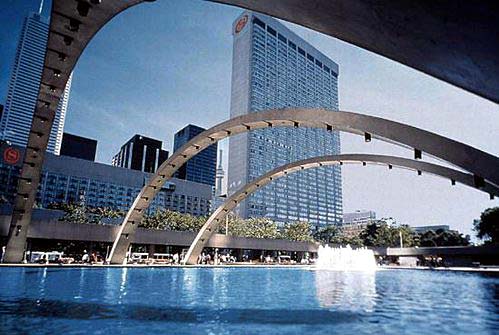
The Society has made available a revised program, a city map and a floorplan. We at DSN find this sort of information handy, and look forward to seeing you at JDM, our favourite conference.
If you have not registered, it is not too late.
Filed in
Gossip
Subscribe to Decision Science News by Email (one email per week, easy unsubscribe)
THE SOCIETY FOR NEUROECONOMICS
The Society for Neuroeconomics promotes the research and dissemination of knowledge in neuroeconomics. The society was incorporated in 2005 after meeting informally at workshops and other meetings over the last five years.
What is Neuroeconomics?
Neuroeconomics is a multidisciplinary research field incorporating neuroscience, economics, and psychology aimed at developing an understanding of how we make choices. It looks at the brain when we evaluate decisions, categorize risks and rewards, and when we interact with others. (from Wikipedia)
“Neuroeconomics is an interdisciplinary research program with the goal of building a biological model of decision making in economic environments. Neuroeconomists ask, how does the embodied brain enable the mind (or groups of minds) to make economic decisions? By combining techniques from cognitive neuroscience and experimental economics we can now watch neural activity in real time, observe how this activity depends on the economic environment, and test hypotheses about how the emergent mind makes economic decisions. Neuroeconomics allows us to better understand both the wide range of heterogeneity in human behavior, and the role of institutions as ordered extensions of our minds.” (from the Neuroeconomics Explained post from professor Kevin McCabe’s Weblog)
Read more about Neuroeconomics here.
The Society for Neuroeconomics Current Officers:
President:
Colin Camerer
Secretary/Treasurer:
Aldo Rustichini
Chief Information Officer:
Kevin McCabe
Immediate Past President:
Paul Glimcher
Full Program of the last Society conference, with abstracts
Filed in
Conferences
Subscribe to Decision Science News by Email (one email per week, easy unsubscribe)
SOCIETY FOR JUDGMENT AND DECISION MAKING 2005 ANNUAL CONFERENCE
The Society for Judgment and Decision Making is an interdisciplinary academic organization dedicated to the study of normative, descriptive, and prescriptive theories of decision. Its members include psychologists, economists, organizational researchers, decision analysts, and other decision researchers. The Society’s primary event is its Annual Meeting at which Society members present their research.
The Society for Judgment and Decision Makingâs Annual conference will be held at the Sheraton Centre in Toronto, ON, Canada, from November 12-14, 2005. As in 2004, A full day (Saturday) has been added to the schedule to make room for more presentations and for two Keynote Speakers.
Keynote Speakers
⢠Keynote speaker #1: Michael Posner, Professor Emeritus of Psychology, University of Oregon, and author of many path-breaking articles on neural mechanisms and structures underlying selective attention.
⢠Keynote speaker #2: Nassim Nicholas Taleb, luminary, friend of Decision Science News, and author of Fooled by Randomness.
Women in SJDM
Friday November 11, 2005 from 3:00 â 5:00 pm
City Hall Room of the Sheraton
This is the 2nd annual Women in SJDM conference networking event to
promote advancement of women in the field of JDM. The event will begin with a panel discussion of leading female JDM scholars who will cover topics such as salary negotiation and disparities between men and women, dual-career issues, work/family issues, and tenure angst. Panelists include Linda Babcock, Maya Bar-Hillel, Colleen Moore, Sandra Schneider, and Elke Weber. The event will end with an informal networking session. Both men and women who are interested in these and similar topics are encouraged to attend. Coffee and pastries will be served.
Awards
⢠The Best Student Poster Award is given for the best poster presentation whose first author is a student member of SJDM.
⢠The Jane Beattie Travel Memorial Scholarship subsidizes travel to the United States for scholarly pursuits related to JDM research, including attendance of the annual meeting.
Program Committee
Craig Fox (institutional memory)
Dan Ariely (program chair)
Derek Koehler (conference coordinator)
Ellen Peters (speaker coordinator)
George Wu (poster chair)
Judy Lin (Organizer galore)
Maya Bar-Hillel (fearless president)
Mike DeKay (institutional memory)
Rachel Croson (communications)
Rebecca Ratner (social chair)
Yuval Rottenstreich (equipment coordinator)
Hotel Information
This yearâs meeting will be held at the Sheraton Centre, Toronto. Sheraton Centre, Toronto 123 Queen Street West Toronto, Ontario M5H 2M9 Canada (416) 361-1000 http://www.sheratontoronto.com/
Further details regarding this event are available at http://www.sjdm.org or http://www.sjdm.org/programs/2005-hotel.pdf